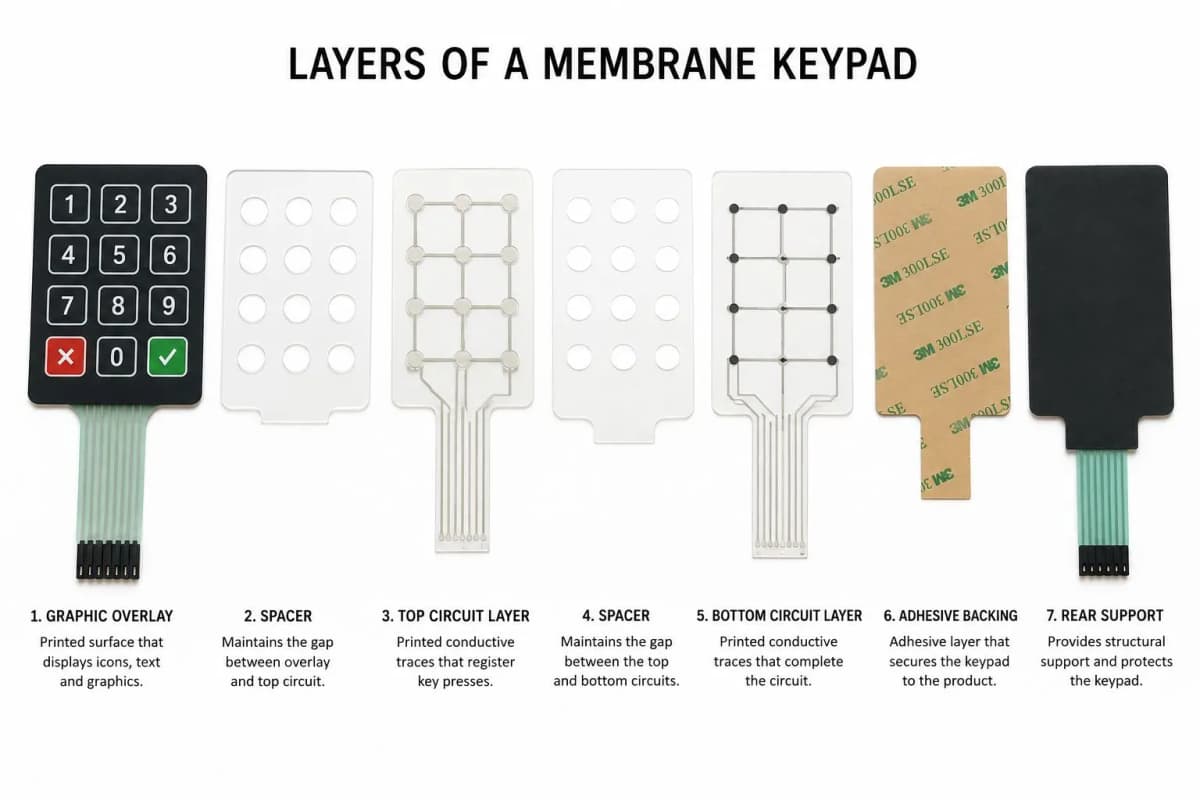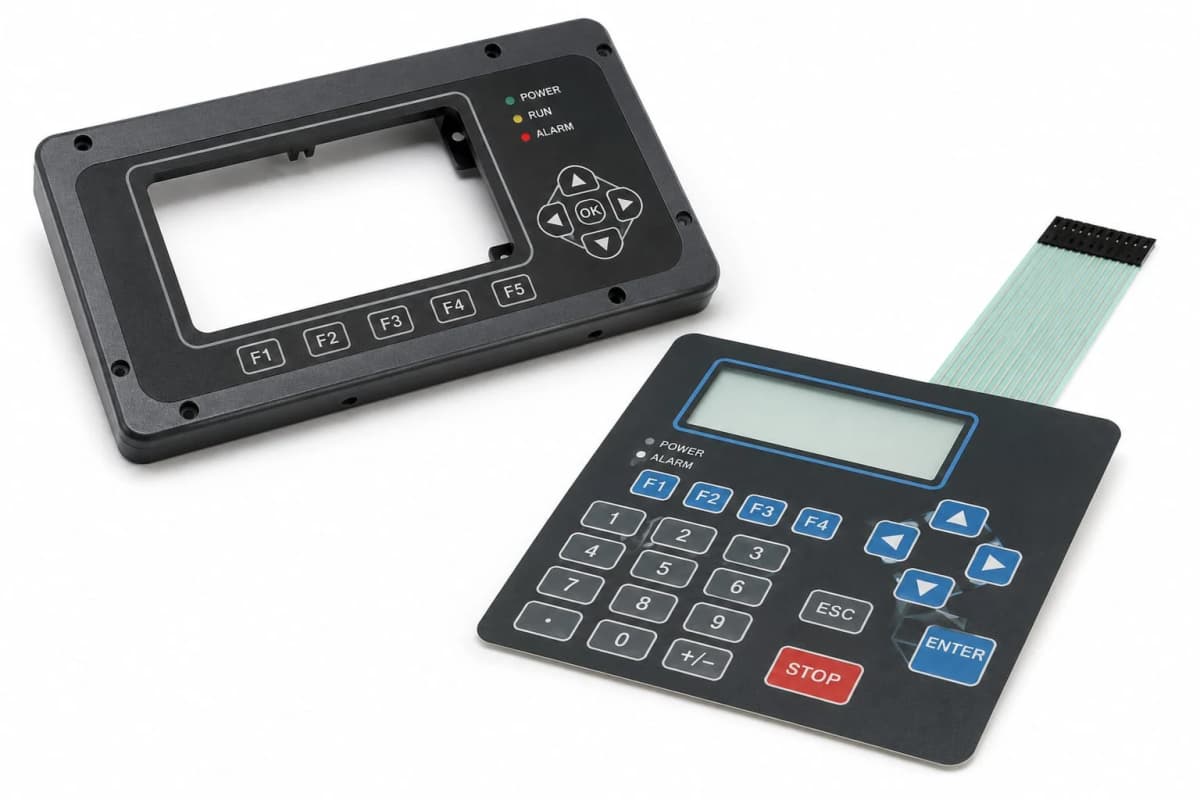
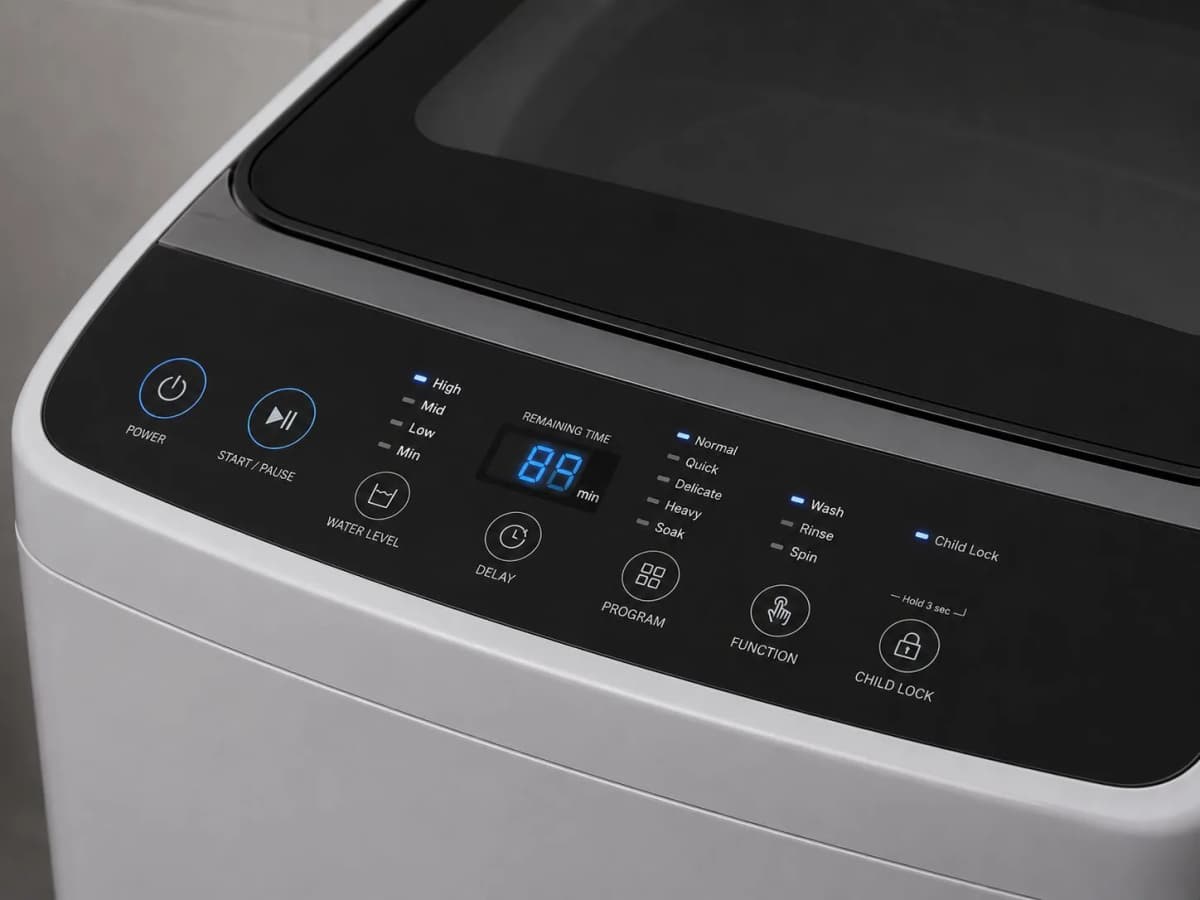
Backlighting is the single option that most changes a membrane keypad's construction, thickness and cost. Choose the wrong method and the keypad either glows unevenly, runs too hot or drains the battery. Choose the right one and the product looks finished from the first night of use.
This guide compares the four main methods and explains where each one fits.
Why This Matters
Many teams treat backlighting as a checkbox: "backlit, yes or no". In practice there are several very different ways to deliver light, and each constrains the thickness, circuit type, power supply and appearance of the product.
Our guide to keypads with LEDs vs without LEDs covers whether to light the keypad at all. This article covers how to do it once the answer is yes.
Key Takeaways
- Four methods dominate: discrete SMD LEDs, light guide film (LGF), electroluminescent (EL) panels and fiber optics.
- Discrete LEDs are flexible and bright but need distance and diffusion to avoid hot spots.
- Light guide film gives thin, even light with few LEDs, and suits large or complex keypads.
- EL gives a thin uniform glow but needs an inverter and dims with age.
- Fiber optics suit small numbers of point sources or very tight spaces.
- Define brightness at the overlay surface, and decide the method before the stack is drawn.
Method 1: Discrete SMD LEDs
Small surface-mounted LEDs sit on an FPC or PCB under each key, legend or icon. Light passes up through a diffuser and the printed legend.
Advantages
- Precise control: each key or icon can have its own LED and color
- High brightness and easy dimming
- Mature, low-cost components
- Supports multi-color and mode indication
Limitations
- Hot spots appear unless there is enough distance and diffusion
- More LEDs means more solder joints, current and heat
- Needs an FPC or PCB layer
- Stack height grows with the distance needed for good mixing
Best for: keypads with a modest key count, individually lit legends, or status lighting with multiple colors.
Method 2: Light Guide Film (LGF)
A thin, patterned film acts as a flat light pipe. LEDs placed at the edge inject light into the film, and tiny surface features spread it evenly toward the overlay.
Advantages
- Very even illumination from few LEDs
- Thin stack, usually thinner than discrete LEDs with a diffuser
- Lower power and heat, since fewer LEDs are used
- Scales well to large panels and irregular shapes
Limitations
- Cost of the film and its pattern design
- Less suited to lighting individual keys in different colors
- Dome and tactile layers must be integrated carefully so the film remains effective
- Performance depends on the optical design, which needs experience
Best for: larger keypads, premium products and designs that need uniform glow with low power.
Method 3: Electroluminescent (EL) Panels
An EL lamp is a thin printed or laminated panel that glows when driven by an AC signal from an inverter.
Advantages
- Extremely thin and flexible
- Soft, uniform glow over a large area
- Low heat
Limitations
- Requires an inverter that creates a high-voltage AC drive
- Brightness declines over the panel's life
- Can emit faint audible noise
- Limited color range and brightness compared with LEDs
- Cut-outs and dome integration need care
Best for: thin products that need a diffuse glow and where the inverter and brightness decay are acceptable.
Method 4: Fiber Optic Lighting
Strands of optical fiber carry light from a remote LED to specific points on the keypad.
Advantages
- Point sources exactly where needed
- LED can sit away from the keypad, which helps in tight or hot areas
- Very thin at the point of use
Limitations
- Labor-intensive to assemble, with higher cost at volume
- Not suited to lighting large areas evenly
- Fiber routing and bend radius add design constraints
Best for: small numbers of indicator points, special-effect lighting and niche products.
Backlighting Methods Compared
| Feature | Discrete LEDs | Light guide film | EL panel | Fiber optic |
|---|---|---|---|---|
| Uniformity | Fair, needs diffusion | Very good | Very good | Point sources |
| Added thickness | Moderate to thicker | Thin | Thinnest | Thin at point |
| Brightness range | High | Moderate to high | Low to moderate | Moderate |
| Power and heat | Moderate | Low | Low, plus inverter | Low |
| Color flexibility | Excellent | Good | Limited | Good |
| Life behaviour | Long, stable | Long, stable | Fades with age | Long |
| Relative cost | Moderate | Moderate to higher | Moderate | Higher |
| Needs FPC or PCB | Yes | Yes (edge LEDs) | No, but inverter | Remote LED |
Designing for Good Light
Define Brightness at the Surface
Specify brightness as measured at the finished overlay, in a unit such as candela per square metre, and set a uniformity target across the lit area. LED current alone says nothing about what the user sees.
Control Light Bleed
Light that leaks around keys and windows looks cheap. Use opaque ink layers, dark spacers and accurately die-cut apertures. Bleed control is far easier to design in than to fix.
Mind the Overlay
The overlay's color, thickness and ink density change how much light passes. A dense dark ink with a thin translucent legend window is the usual recipe for crisp lit legends. Material choice also matters; see our guide on overlay material types.
Bin the LEDs
LEDs are sorted by color and brightness. Mixed bins show up as mismatched keys. Specify tight binning or a single bin per lot.
Plan for Dimming
Dimming through PWM or current control lets users choose comfortable levels and cuts power. Timed shutoff saves battery.
Manufacturing Insight: Ask for a lit sample in a dark room before approving tooling. Lighting problems are visible in seconds under real conditions and are almost invisible in a render.
Power and Battery Considerations
LGF with a few edge LEDs is typically the most power-efficient route for a fully lit panel. Discrete LEDs scale with count, so lighting only key legends or a home row saves power. EL needs an inverter that adds its own draw and electronics. For battery products, combine efficient light distribution with dimming and timed shutoff.
Typical Applications
- Discrete LEDs: industrial controllers, individually lit mode keys, multi-color status panels.
- Light guide film: automotive, aerospace and premium panels with many keys.
- EL: thin consumer and instrument panels with diffuse glow.
- Fiber optic: niche indicator and decorative lighting.
Common Mistakes
- Choosing the method after the stack is drawn. Each method needs different space and layers.
- Specifying only LED current. What counts is surface brightness and uniformity.
- Too little distance with discrete LEDs. This is the most common cause of hot spots.
- Ignoring EL aging. A panel that looks right at delivery will dim over time.
- Forgetting daylight readability. Backlit legends must also read clearly in bright light.
- Skipping a lit prototype review. Many issues only appear in a dark room.
Decision Framework
- Do you need even light across many keys? Start with light guide film.
- Do you need individually lit or multi-color keys? Use discrete LEDs, with enough diffusion.
- Is the product extremely thin and cost tolerant of an inverter? Consider EL.
- Do you need a few small points of light? Consider fiber optics.
- Is the product battery powered? Favor LGF or limited lighting, plus dimming.
- Define surface brightness, uniformity and color bin on the drawing.
Frequently Asked Questions
What are the main ways to backlight a membrane keypad?
The four common methods are discrete surface-mounted LEDs, light guide film fed by edge LEDs, electroluminescent panels and fiber optic lighting. Each differs in uniformity, thickness, power draw, life and cost.
Which backlighting method gives the most even light?
Light guide film and EL panels generally give the most uniform light across a large area. Discrete LEDs can match them only with enough diffusion and distance between LED and overlay.
Is EL backlighting still used?
Yes, mainly where a thin, evenly lit panel is needed. EL needs an AC inverter and its brightness fades over life, so many designs now prefer LEDs with light guide film.
How thick is a backlit membrane keypad?
Light guide film and EL add the least, while discrete LEDs under a diffuser need more height to avoid hot spots. Confirm the final stack against the actual design.
Can only some keys be backlit?
Yes. Backlighting can be limited to chosen legends, a home row or specific icons using masks or individual LEDs, which reduces cost and power.
Does backlighting need a PCB or FPC?
Usually yes for LED-based methods, since surface-mounted LEDs need a circuit that carries components. Our guide to circuit types explains the options.
Conclusion
Backlighting is a light-distribution problem, not a part count. Discrete LEDs offer control, light guide film offers even glow with low power, EL offers thin diffuse light with trade-offs, and fiber optics serve special point sources. Choose early, define brightness at the surface and review a lit prototype before committing to tooling.
To discuss the best method for your product, contact our engineering team.