

Custom Acrylic Panels
& Mimic Diagram Panels
Precision-fabricated cast acrylic panels for control room mimic diagrams, HMI fascias, equipment front panels, backlit display overlays, and OEM instrument interfaces — manufactured with second-surface UV print, CNC-routed cut-outs to IEC switch dimensions, opal backlight diffusion layers, and hard-coat surface finishing, from single prototypes to production-volume OEM supply from our Ahmedabad facility.
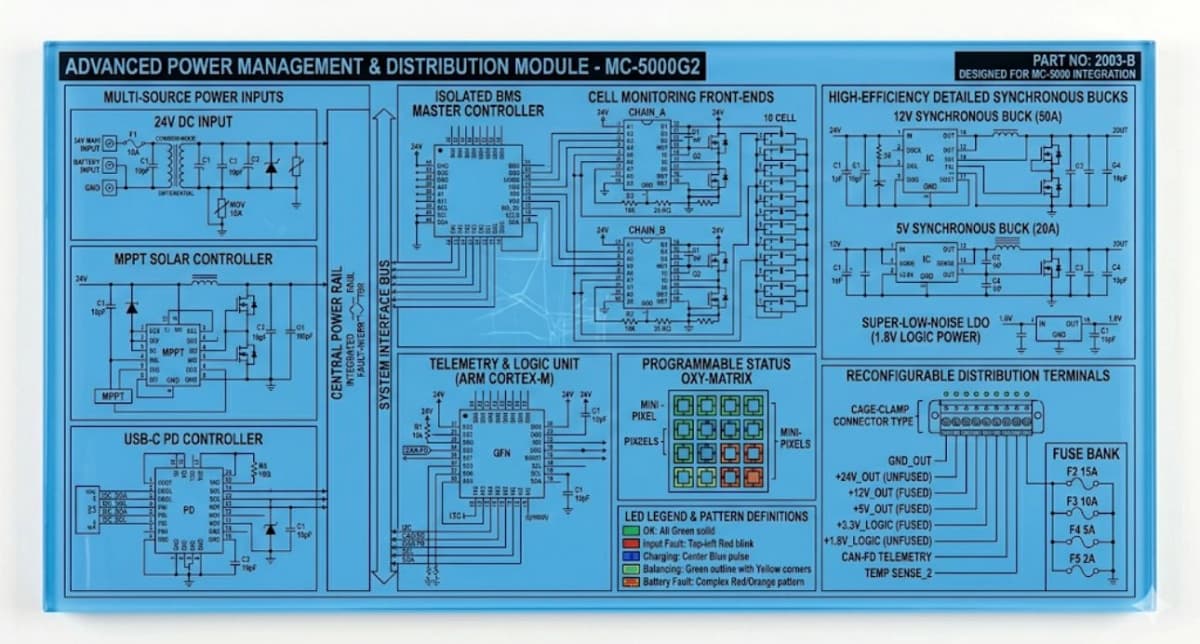
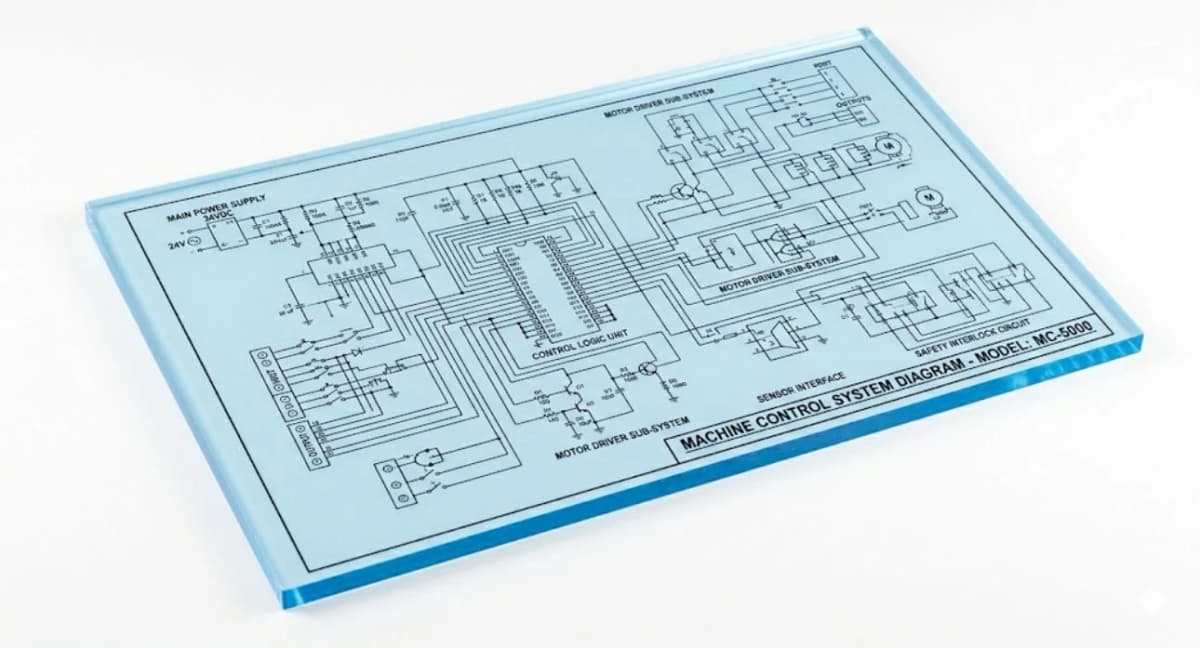
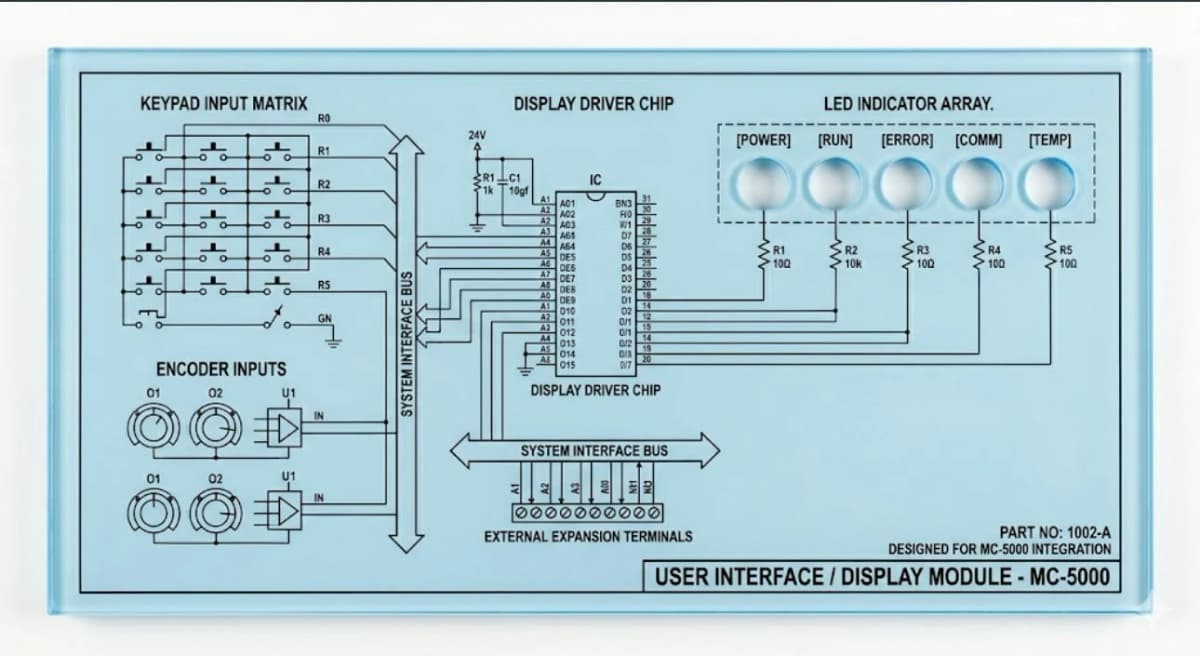
Second-surface print puts the artwork permanently behind the acrylic — not on top of it.
A printed vinyl overlay on a control panel lives on the surface that operators interact with every day. Keys are pressed against it, cleaning cloths are wiped across it, tools are rested on it, and within a few years the legend at every frequently-used switch location is worn through to the substrate beneath. Second-surface acrylic print reverses the construction: the artwork is printed onto the rear face of a sheet of optically-clear PMMA, and the clear acrylic face — not the ink — is what the operator touches. The artwork cannot be worn away by use. It is sealed behind 3–10 mm of scratch-resistant PMMA for the rated service life of the equipment.
Acrylic mimic diagram panels are the professional standard for control room plant schematics.
A mimic diagram panel is the primary operational interface in a control room — the graphical representation of the plant, process, or distribution network that operators read to understand system status. Vinyl and painted mimic panels are maintenance problems: they yellow, peel, scratch, and fade. An acrylic mimic panel with second-surface UV print and backlit opal diffusion layer is a precision-manufactured instrument panel — dimensionally stable, optically uniform, serviceable for the full life of the control system, and manufacturable to the exact P&ID, one-line diagram, or network schematic drawing supplied by the engineer of record.
CNC machining means every cut-out is to component dimension — no hand-finishing, no remedial drilling on-site.
A control panel overlay or fascia that carries cut-outs for 22.5 mm push-button switches, 16 mm pilot lamps, display module apertures, and key-switch bores must have those dimensions accurate to ±0.1 mm if every component is to fit and seat correctly the first time. Hand-cut or punched cut-outs in vinyl and sheet materials are not repeatable at that tolerance across a production batch. CNC routing on cast acrylic to a dimensioned drawing, with all cut-outs held to ± 0.1 mm diameter and ± 0.2 mm position, means the acrylic panel installs as designed — no remedial drilling, no hand-chamfering, no components that don't fit first time.
Mimic Diagram Panels
Acrylic Mimic Panels by Application
Mimic diagram panels for power distribution, process P&ID, HVAC, building services, traffic, and infrastructure control rooms — manufactured to your engineering drawing, sized to your console, and backlit to your lux requirement.
Power Distribution Mimic Panels
Single-line electrical distribution schematics for switchboards, MCCs, and substations — bus-bar layout, breaker positions, transformer symbols, feeder routes — with CNC apertures for indicator lamps and mimic switches at every switchgear position.
Process P&ID Mimic Panels
Piping and instrumentation diagrams for water treatment, chemical process, and manufacturing plant — vessels, pumps, valves, instrumentation loops — with push-button and indicator apertures at each control point in the process.
HVAC & Building Services Diagrams
Air handling unit schematics, chilled water circuit mimic diagrams, fire and gas detection zone panels — for BMS control rooms, mechanical plant rooms, and facilities management consoles.
Traffic & Infrastructure Control Panels
Road network, tunnel, rail, or airport layout mimic panels for traffic control centres and operations rooms — showing signal positions, sensor zones, and detection points with indicator lamp cut-outs at each node.
Why Acrylic Mimic
Acrylic vs Vinyl vs Painted Mimic Panels
The choice between panel construction methods determines whether the mimic diagram is still accurate, readable, and intact at the end of the equipment's service life — or needs to be replaced at the first maintenance shutdown.
| Property | Vinyl Overlay | Painted Panel | Acrylic Mimic Panel |
|---|---|---|---|
| Artwork Protection | First-surface print exposed to operator and solvents | Painted surface chips, scratches, repaints needed | Second-surface print sealed behind clear PMMA — never exposed |
| Backlight Performance | Hotspots visible; uneven diffusion over vinyl | Cannot be backlit — opaque substrate | Opal PMMA diffusion layer — uniform ±10% across full face |
| Cut-Out Precision | Hand-cut or die-cut; variable dimensional accuracy | Drilled; no sub-mm tolerance without specialist fixturing | CNC routed ± 0.1 mm; every cut-out to IEC component dimension |
| Service Life | 3–5 years; delamination, yellowing, edge lift | 5–10 years with maintenance; touch-up repainting required | 15–25 years; no maintenance; rated for control room environment |
| Colour & Complexity | Limited palette; complex artwork registration difficult at scale | Single or two-colour silkscreen typical; limited symbol accuracy | Full CMYK + PMS; P&ID complexity reproduced to drawing accuracy |
| Modification | Overlay replacement; residue removal on panel face | Full strip and repaint required for any change | New panel manufactured to revised drawing — precise and fast |
Construction
Engineered Layer by Layer
Eight material and process layers — from hard-coat scratch-resistant surface through UV print, second-surface legend, cast PMMA face, optional backlight diffusion, structural substrate, CNC machining, and edge finishing — engineered to match the operating environment, service life, and backlight requirement of your specific application.
L-01
Hard Surface Anti-Scratch Coating
3H–5H Hard Coat; UV-Cured; Solvent Wipe Resistant
L-02
Surface Print or Decoration Layer
UV Flatbed or Screen Print; CMYK + PMS Match
L-03
Second-Surface Legend / Mimic Print
Reverse-Printed Artwork Protected Behind Clear Acrylic
L-04
Cast Acrylic Face Sheet
2–10 mm Cast PMMA; Optically Clear, Opal, or Coloured
L-05
Backlight Diffusion Layer (Optional)
Opal Acrylic or Frosted PET — Uniform LED Diffusion
L-06
Structural Acrylic or Polycarbonate Sub
3–20 mm Cast Acrylic / 3 mm PC for Impact Resistance
L-07
Cut-Out & Aperture Machining
CNC Routed Holes, Slots, Keyways, Engraved Recesses
L-08
Edge Finish & Assembly Tabs
Flame Polish / Diamond Mill / Chamfer; Mounting Tabs
Technical Parameters
Panel & Material Specs
Standard parameters across our custom acrylic panel range. All values are material-grade and construction-dependent — specify your panel dimensions, operating environment, and component layout for a confirmed construction specification.
Materials & Configuration
Built to Your Panel Specification
Material grade, surface finish, print method, machining profile, and edge treatment — every variable selected to match your panel's function, environment, operator interface requirement, and OEM assembly standard.
Acrylic Grades & Types
Surface Finish Options
Print & Decoration
Machining & Cut-Outs
Capabilities
Feature & Build Variants
Material grade, backlight construction, print method, machining profile, edge finish, and surface coating — every variable configured to your drawing, your component list, and your OEM assembly standard.
Production Capability
Built for Serious Production
Acrylic Mimic Diagram Panels — Engineering P&IDs and Control Schematics Rendered in Acrylic
A mimic diagram panel is a graphical representation of a process, pipeline, electrical distribution system, or plant layout — permanently reproduced onto an acrylic face sheet and backlit so operators can read the plant status at a glance from across a control room. Unlike printed vinyl overlays that yellow, delaminate, and scratch within years, an acrylic mimic panel with second-surface UV print is optically protected behind 3–6 mm of clear cast PMMA. The artwork cannot be scratched off, cannot yellow from UV exposure, and will not delaminate in a heated control room environment. We manufacture acrylic mimic panels to your P&ID drawing, one-line diagram, or control schematic — in any panel size, with backlight cut-outs routed for LED module mounting, and with CNC-machined apertures for indicator lamps, push-button switches, key switches, and digital displays exactly where your IEC layout requires them.
Second-Surface Print — Artwork Protected Behind the Acrylic Face
First-surface printing — printing onto the front of the acrylic panel — puts the ink directly under the operator's hands, under cleaning solvents, under abrasion from controls and tooling. On an industrial control panel, a first-surface print will show wear at every button location, every frequently read legend, every touched edge within the first service cycle of the equipment. Second-surface printing reverses the panel and prints the complete legend, diagram, and colour fills onto the rear face of the clear acrylic, then bonds a backing sheet. The clear acrylic face is what the operator touches. The artwork is never exposed. This is the construction method used on every professional HMI overlay, every backlit control panel, and every mimic diagram panel manufactured to last for the rated service life of the equipment.
Precision CNC Machining — Cut-Outs and Apertures to IEC Switch Dimensions
An acrylic panel that carries cut-outs for switches, push-buttons, indicator lamps, key switches, and display modules must have those cut-outs dimensioned to the IEC standard for the specific component — 22.5 mm for standard control gear, 16 mm for pilot devices, custom dimensions for OEM keypad or display integration. CNC routing to ± 0.1 mm tolerance on cut-out diameter and ± 0.2 mm on overall panel profile ensures every component fits flush, every bezel seats correctly, and every panel installs into the enclosure without remedial hand-finishing. Hole drilling, slot cutting, engraved recesses for flush-mount switches, countersunk mounting holes, and edge flame-polishing all performed in-house on the same machining programme as the panel profile.
Backlit Panel Construction — Opal PMMA Diffusion for Uniform LED Backlighting
Control panels and mimic diagrams that need to be readable in high-ambient-light environments, dimly lit substations, and 24-hour control rooms require backlighting. A backlit acrylic panel is not a standard panel with an LED strip mounted behind it — correct backlit panel construction uses an opal PMMA diffusion sheet of matched transmission specification between the LED module and the print layer so that light output across the panel face is uniform to within ±10% — no hot spots over LED positions, no dark zones between LEDs. The graphic layer is UV-printed in a backlit colour palette — translucent colour fills that glow when backlit, with opaque areas that remain solid regardless of backlight state. We specify the opal grade, LED module type, and print opacity to your panel dimensions and operating light level requirement.
Applications
Industries & Applications Served
Wherever a panel must be accurate, durable, clearly legible, and manufactured to a dimensioned drawing — from control room mimic diagrams and switchboard fascias through HMI overlays, instrument front panels, and architectural display.
Custom Fabrication & OEM Range
Related Products
Polycarbonate Fabricated Components
Impact-resistant polycarbonate fabricated panels, guards, and housings — CNC machined, printed, and finished to your drawing for equipment where PMMA impact resistance is insufficient.
Front Fascia Assemblies
Complete multi-layer front fascia assemblies integrating membrane switch layers, acrylic overlays, display apertures, and connector termination — supplied as a single fitted assembly.
Multi-Layer Interface Assemblies
Engineered multi-layer HMI assemblies combining printed overlay, membrane switch circuit, acrylic display window, and metal backplate — to full OEM drawing and bill of materials.
Every Panel Built.
Every Spec Met.
Share your panel drawing, P&ID or mimic diagram artwork, component layout, and backlight requirement — we'll specify the correct acrylic grade, print construction, and CNC profile and return a detailed manufacturing quote.