

Polycarbonate
Fabricated Components
Precision-fabricated polycarbonate components — machine guards, flanged covers, formed housings, enclosure windows, ESD-safe equipment panels, and structural assemblies — CNC-routed and line-bent to your drawing, with formed flanges to mating-frame tolerance, UL94 V-0 flame-retardant grade available, and hardware fitted for ready-to-install OEM supply from our Ahmedabad fabrication facility.
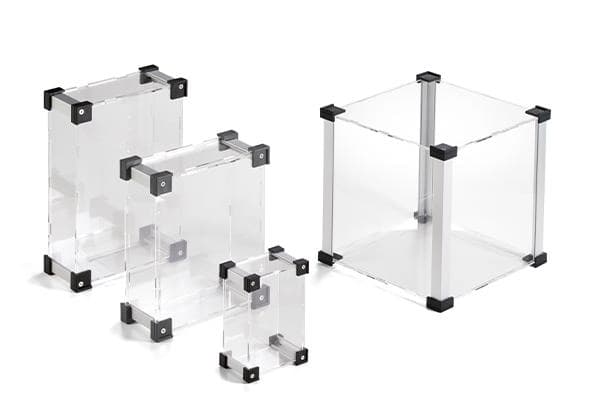
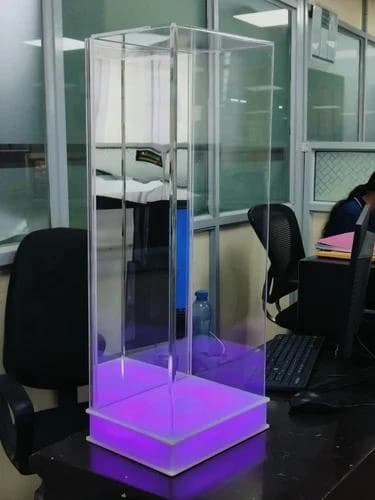
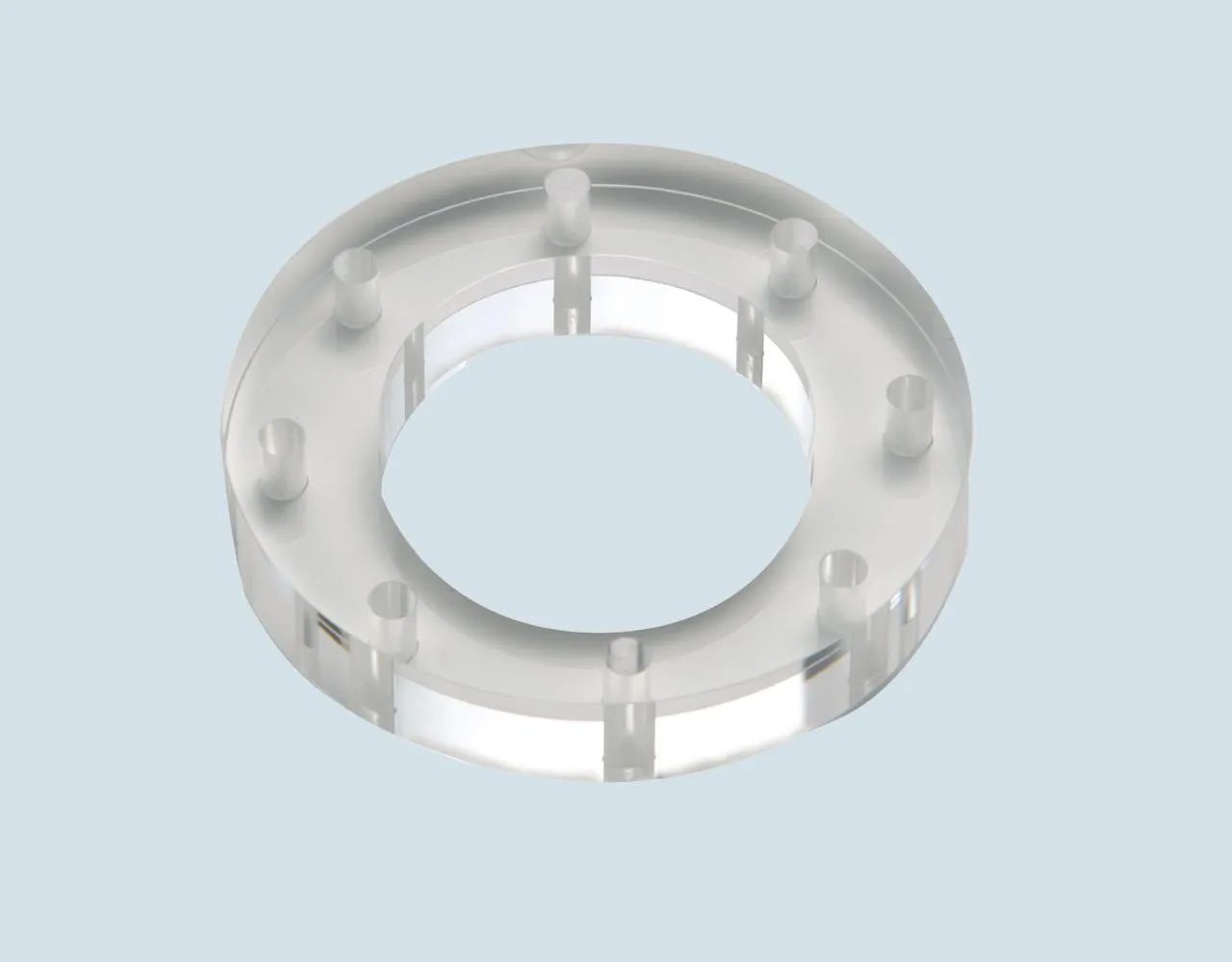
Polycarbonate doesn't shatter under impact — it deforms. That distinction matters when the guard is between an operator and a moving machine.
The machinery directive and BS EN ISO 14120 require machine guards to retain integrity under the foreseeable impact energies of the guarded process — ejected workpieces, broken tooling, and incidental operator contact. Acrylic (PMMA) guards fracture in brittle mode when struck above their relatively low impact threshold, creating sharp-edged fragments that themselves become a hazard. Polycarbonate at the same thickness absorbs the impact energy by deforming plastically — the guard may deflect, it may permanently deform at the impact point, but it does not fracture into sharp pieces. For machine guarding, this is not a material preference. It is the reason polycarbonate is specified wherever the impact energy of the guarded process cannot be fully quantified.
Flanges fabricated to your mating frame drawing mean the component installs without modification.
A polycarbonate cover or guard with a formed perimeter flange has two functions: structural — providing the bending stiffness that keeps the flat sheet from deflecting under its own weight and from vibration loads — and interfacial — providing the flat bearing surface that seals against a gasket, locates against a frame recess, and provides the clamping face for the fixing bolts. When the flange return depth, flange width, corner treatment, and fixing hole pattern are all machined to the drawing of the mating aluminium extrusion, steel fabrication, or enclosure frame, the component arrives at site as a matched pair. There is no on-site drilling, no shimming of mismatched flanges, no cracking of PC at reworked hole positions.
UL94 V-0 rated polycarbonate is the correct material specification for electrical enclosure windows — not standard clear PC.
OEM electrical equipment manufacturers supplying to IEC 61439, UL 508A, or BS EN 61439 need material compliance documentation for every component in the enclosure construction. Standard optically-clear polycarbonate sheet — the type used for machine guards and general fabrication — is rated HB under UL94 flammability testing. For an electrical enclosure window or cover panel that forms part of the enclosure's fire-containment boundary, HB is not the correct rating. Flame-retardant UL94 V-0 grade polycarbonate is specified, fabricated, and supplied with the material certification and UL94 test report documentation that the OEM compliance file requires.
Component Types
Polycarbonate Components by Application
Machine guards, flanged covers, enclosure windows, formed housings, outdoor shields, and ESD-safe panels — each fabricated to the drawing, grade specification, and hardware requirement of the specific application.
Machine Guards & Safety Screens
Polycarbonate machine guards are the industrial standard for rotating machinery, press tools, conveyor nip-points, and robotic cell perimeter guarding where operators must see the process while being protected from ejected material, swarf, and contact with moving parts. Fabricated from 4–12 mm impact-resistant PC sheet with formed flanges for bolt-down mounting to the machine frame, CNC-routed apertures for lubrication access and sensor cables, and hinged or sliding sections for tool-change access — designed to your machine's guard mounting pattern and BS EN ISO 14120 requirements.
Flanged Panel & Cover Components
Flanged polycarbonate covers, inspection windows, and access panels where the formed flange provides both the structural mounting interface and the seal face for foam or rubber gasket compression. Flanges formed by line-bending or oven-forming to a consistent return depth and angle, drilled and countersunk on a CNC programme to match the mating frame or enclosure fixing pattern exactly. Flange width, return depth, corner treatment, and fixing hole pattern all specified to your drawing — not to a standard catalogue section that requires modification on-site.
Electrical Enclosure Windows & Covers
Flame-retardant UL94 V-0 rated polycarbonate viewing windows and cover panels for electrical switchgear enclosures, distribution boards, motor control centres, and instrumentation cabinets — where transparent access to metering, status indicators, and display modules is required without opening the enclosure. Fabricated to the enclosure manufacturer's door or cover aperture drawing, with a formed flange or rabbeted edge to seat against the enclosure frame, and CNC-routed apertures for door handle cut-outs, lock barrels, and cable gland entry.
Formed Ducts, Chutes & Housings
Three-dimensionally formed polycarbonate components where flat-sheet fabrication methods — line bending, oven forming, solvent cementing — create enclosed profiles: cable management ducts, material chutes, fan inlet cowls, instrument housings, and environmental covers. PC's formability allows compound-angle bends, closed-profile box sections, and curved profiles that are not achievable in acrylic without cracking risk. Solvent-cemented joints on polycarbonate bond to full material strength — the joint does not become the weakest point of the component.
Outdoor & UV-Exposed Components
UV-stabilised polycarbonate fabricated components for outdoor mounting — canopy panels, solar equipment covers, weather shields for instrumentation, agricultural equipment guards, and transport vehicle viewing windows. Standard extruded PC yellows and embrittles on UV exposure within 3–5 years without UV stabilisation. UV-stabilised coextruded PC sheet carries a co-extruded UV-absorbing cap layer on both faces — fabricated and formed in the same process as standard PC but rated for 10+ years outdoor service without significant yellowing or impact strength loss.
Anti-Static ESD-Safe Components
Anti-static polycarbonate fabricated components for semiconductor handling equipment, electronics assembly lines, clean rooms, and explosive-atmosphere enclosures where standard PC's surface resistivity of >10¹³ Ω would allow charge accumulation. ESD-safe PC sheet with permanent anti-static additive (surface resistivity 10⁶–10⁹ Ω) fabricated into machine guards, component handling trays, assembly jigs, and equipment covers — providing visual access and impact protection without the ESD risk that standard polycarbonate would introduce into the process environment.
Material Selection
Polycarbonate vs Acrylic — Which to Specify
Both materials are transparent, both are CNC-machinable and printable, and both are manufactured in our facility. The specification decision is driven by impact requirement, forming complexity, operating temperature, flammability rating, and service environment — not by material cost alone. Tell us the application and we'll confirm the correct material.
| Property | Cast Acrylic (PMMA) | Polycarbonate (PC) |
|---|---|---|
| Impact Resistance | Brittle fracture under impact; shatters at stress concentrations | 850 J/m notched Izod; does not shatter — deforms under extreme load |
| Formability (Bending) | Line-bends but cracks at tight radii; limited 3D forming | Line-bends cleanly; oven-forms to compound 3D profiles without cracking |
| Outdoor UV Resistance | Excellent inherent UV resistance; stable outdoors long-term | Requires UV-stabilised grade; co-ex cap layer for outdoor service |
| Operating Temperature | −20°C to +70°C continuous; distorts above 80°C | −40°C to +120°C continuous; short-term to +135°C |
| Flammability | HB rating only; burns with dripping | UL94 V-0 / V-2 grade available for electrical enclosure OEM use |
| Optical Clarity | Up to 92% VLT; slightly clearer than PC for display applications | Up to 88% VLT; slightly lower but sufficient for all guarding / window uses |
| Best Application | Display panels, mimic diagrams, optical components, cosmetic fascias | Machine guards, structural covers, formed housings, outdoor enclosures |
Construction
Fabricated Layer by Layer
Eight fabrication stages — from surface coating and print through PC face sheet selection, line-bend forming, flange and return fabrication, CNC cut-outs, secondary substrate lamination, edge finishing, and hardware fitting — each stage executed to the drawing specification before the next begins.
L-01
Surface Hard Coat or Print Layer
UV-Cured Hard Coat; Screen / UV Flatbed Print; Anti-Static Coat
L-02
Polycarbonate Face Sheet
2–12 mm Cast or Extruded PC; Optically Clear or Tinted
L-03
Formed / Bent Profile
Line-Bent or Oven-Formed to Drawing; Radii to Spec
L-04
Flanges & Returns
CNC-Routed Flanges; Drilled & Countersunk; Formed Returns
L-05
Cut-Outs & Apertures
CNC Routed Holes, Slots, Notches, Recessed Pockets to ± 0.2 mm
L-06
Secondary Substrate (if laminated)
Aluminium Sheet, GRP, or PC Backer for Structural Rigidity
L-07
Edge Finish
Flame Polish / Router Finish / Chamfer / Radiused Corner
L-08
Hardware & Assembly Inserts
PEM Nuts, Rivet Nuts, Snap Clips, Hinge Mounts Fitted to Drawing
Technical Parameters
Material & Fabrication Specs
Standard parameters across our polycarbonate fabrication range. Values vary by PC grade and fabrication process — specify your component envelope, operating environment, and compliance requirement for a confirmed material and construction specification.
Materials & Configuration
Built to Your Component Specification
PC grade, forming method, flange geometry, surface finish, print, hardware, and assembly — every variable specified to your drawing, your operating environment, and your OEM compliance requirement.
Polycarbonate Grades
Fabrication Processes
Surface Finishing
Hardware & Assembly
Capabilities
Feature & Build Variants
PC grade, forming profile, flange geometry, cut-out pattern, surface finish, hardware, and assembly completion — every variable configured to your drawing and OEM assembly standard.
Production Capability
Built for Serious Production
Flanges That Match Your Mating Interface — Not a Standard Return That Needs Adjustment
A fabricated polycarbonate component with a formed flange is only as useful as the accuracy of that flange to the mating frame, enclosure, or machine surface it bolts to. A flange that is 2 mm wider than the recess it must seat into, or whose fixing holes are 1.5 mm out of position relative to the threaded inserts in the aluminium extrusion, requires remedial hand-drilling and shimming on-site before installation — adding time, adding variation, and potentially cracking the PC sheet at the re-drilled location. We programme and machine flange profiles, return depths, corner treatments, and hole patterns directly from your supplied drawing or DXF file — the component arrives ready to install without modification.
Line Bending and Oven Forming to Consistent Angles — Not Hand-Bent Approximations
Line bending polycarbonate with a strip heater produces a formed angle in a single operation — but the angle accuracy, bend radius consistency, and spring-back compensation depend entirely on the process control applied. Inconsistent heating time, variation in heater distance, and uncontrolled spring-back produce formed angles that vary by ±3–5° across a batch — unacceptable where the formed component must fit into a defined envelope or mate with a parallel face. We form PC components using controlled-temperature line benders with tooling-supported bend guides that hold the specified angle to ±1°, with bend radius matched to material thickness to eliminate stress-cracking at the bend zone.
Flame-Retardant PC for Electrical Enclosure OEM Supply — UL94 V-0 Certified Grade
Standard polycarbonate sheet — even optically clear grades from reputable manufacturers — is rated HB under UL94 flammability classification. For viewing windows and cover panels installed in electrical enclosures, distribution boards, and switchgear that must comply with IEC 61439, BS EN 61439, or UL 508A, HB-rated materials are not permissible — the enclosure standard requires V-0 or V-2 rated plastics in the enclosure construction. We supply fabricated PC components in UL94 V-0 certified flame-retardant grade with certification documentation available for OEM compliance files. Material certification, UL94 test reports, and RoHS compliance declarations supplied on request for each production batch.
Complete Fabricated Sub-Assemblies — Hardware Fitted, Gaskets Bonded, Ready to Install
A polycarbonate panel drawing that shows PEM nut inserts, bonded foam gasket, hinge pin mounts, and snap-clip retainers is not finished as a cut-and-bent piece of sheet — it is finished when every hardware element is fitted, every insert is pressed, and the gasket is bonded in the correct position and compression. Returning a flat CNC-cut sheet to the assembly department for hardware fitting adds handling, adds variation, and creates a quality escape for missing or mis-positioned inserts. We fit PEM nuts and rivet nut inserts, bond foam and rubber gaskets, mount hinge and clip hardware, and apply adhesive pads and labels to the machined and formed PC component before despatch — delivering a single sub-assembly ready to bolt to the machine or enclosure frame.
Applications
Industries & Applications Served
Wherever a component must be impact-resistant, optically transparent, dimensionally precise, and compliant — from machine guarding and electrical enclosures through outdoor equipment, clean rooms, and heavy industrial fabrication.
Custom Fabrication & OEM Range
Related Products
Custom Acrylic Panels
Cast acrylic panels for control room mimic diagrams, HMI fascias, backlit display overlays, and OEM instrument interfaces — second-surface UV print, CNC-routed cut-outs, and opal backlight diffusion construction.
Front Fascia Assemblies
Complete multi-layer front fascia assemblies integrating membrane switch layers, acrylic or polycarbonate overlays, display apertures, and connector termination — supplied as a single fitted assembly.
Multi-Layer Interface Assemblies
Engineered multi-layer HMI assemblies combining printed overlay, membrane switch circuit, display window, and metal backplate — to full OEM drawing and bill of materials.
Every Component Fabricated.
Every Spec Met.
Share your component drawing, DXF, or part description — flange geometry, forming profile, grade requirement, hardware list, and quantity — and we'll return a confirmed material specification and manufacturing quote.